💸 How to Save Money Student India Without Compromising Your College Experience
Learning how to save money student India is one of the most valuable life skills you can develop during your college years. With rising education costs, hostel fees averaging ₹15,000-₹35,000 monthly in major cities, and daily expenses piling up, Indian students face significant financial pressure. The good news? You can master student budgeting India techniques and implement practical college saving tips India without sacrificing the experiences that make student life memorable.
📋 Table of Contents
📊 Understanding Your Student Financial Landscape in India
Before implementing any save money student India strategies, you need clarity on where your money goes. Indian college students typically spend between ₹15,000 to ₹56,500 monthly depending on their city and lifestyle choices. Breaking down these expenses reveals surprising opportunities to save money student India effectively.
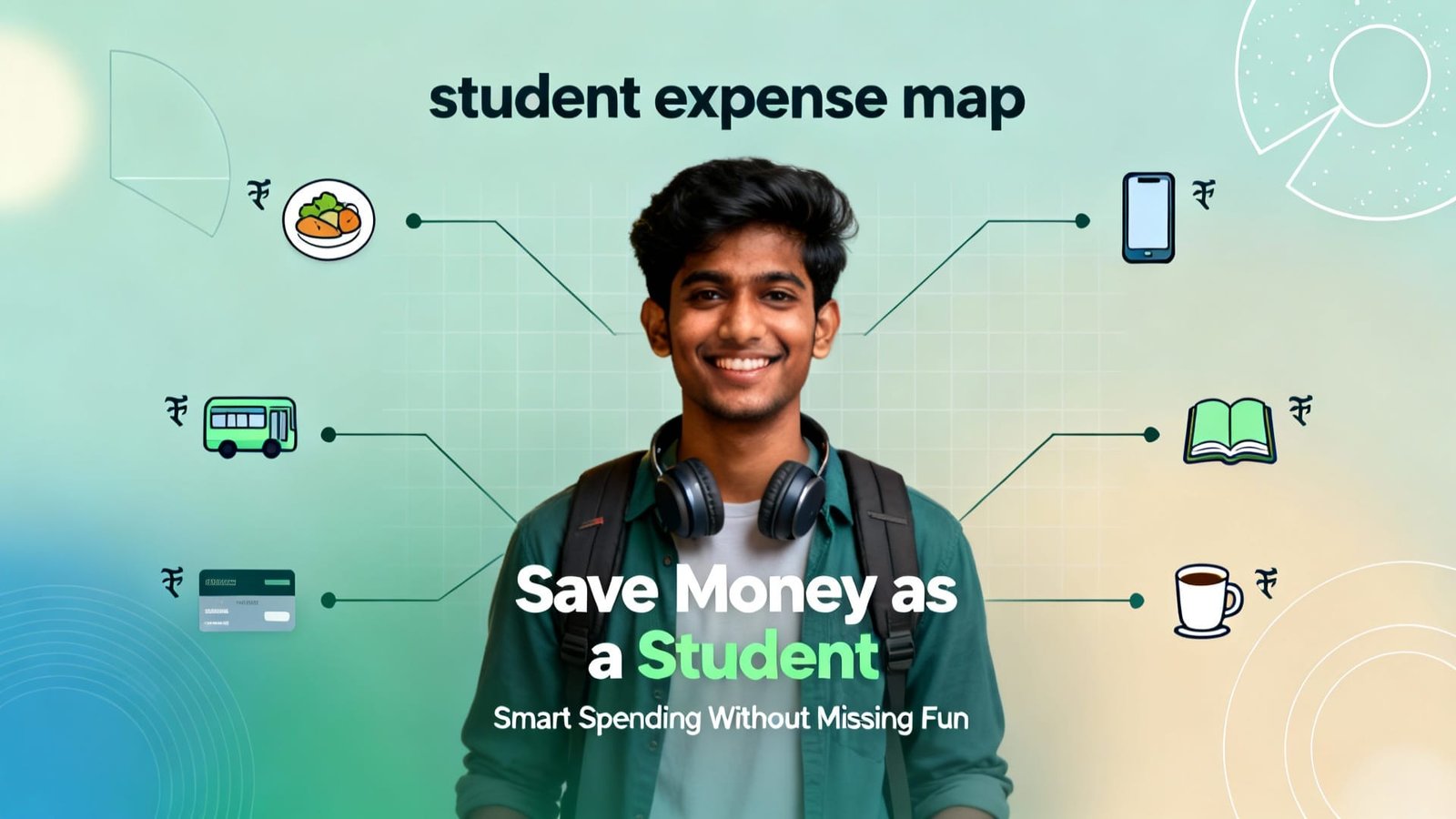
The major expense categories for students include accommodation (₹9,000-₹35,000), food (₹4,500-₹13,000), transportation (₹700-₹3,500), and study materials (₹1,200-₹5,000). Understanding these numbers helps you identify where the best student savings plan India can make the biggest impact. Many students don’t realize that small daily expenses like chai, snacks, and auto rides can consume 15-20% of their monthly budget.
| City | Average Monthly Cost | Accommodation | Food | Transportation |
|---|---|---|---|---|
| Delhi NCR | ₹24,200 – ₹56,500 | ₹15,000 – ₹35,000 | ₹6,000 – ₹13,000 | ₹1,200 – ₹3,500 |
| Bengaluru | ₹22,800 – ₹51,500 | ₹14,000 – ₹32,000 | ₹6,000 – ₹12,000 | ₹1,000 – ₹3,000 |
| Chennai | ₹17,300 – ₹41,500 | ₹10,000 – ₹25,000 | ₹5,000 – ₹10,000 | ₹800 – ₹2,500 |
| Hyderabad | ₹15,400 – ₹36,500 | ₹9,000 – ₹22,000 | ₹4,500 – ₹9,000 | ₹700 – ₹2,000 |
🎯 Creating a Bulletproof Student Budgeting India System
The foundation of learning how to save money as a student India begins with a robust budgeting system. The 3-Account Rule has revolutionized student budgeting India practices: maintain three separate buckets for essentials (50%), discretionary spending (30%), and savings (20%). This approach ensures you save money student India consistently while still enjoying college life.
🔢 The 50-30-20 Student Budget Formula
Allocate 50% of your monthly income (pocket money, scholarships, or part-time earnings) to essentials like rent, utilities, and groceries. Reserve 30% for discretionary spending including entertainment, dining out, and social activities. Most importantly, commit 20% to savings before touching any other money. This best student savings plan India method automates your wealth building.
Smart students use technology to implement college saving tips India effectively. Apps like Walnut, Money Manager, and ET Money automatically categorize expenses and send alerts when you’re overspending. These digital tools make student budgeting India effortless by tracking every rupee without manual entry hassle.
📱 Essential Budgeting Apps for Indian Students
- Walnut: Automatically reads SMS to track expenses and categorize spending patterns
- Money Manager: Create custom categories for student budgeting India needs
- ET Money: Combines expense tracking with investment opportunities
- Spendee: Visual graphs show exactly where money disappears monthly
💰 Smart Strategies to Save Money Student India Style
Implementing proven college saving tips India transforms your financial situation without requiring major sacrifices. The “Save Before You Spend” principle represents the most powerful save money student India technique: immediately transfer 10-20% of any money received into a savings account before budgeting the remainder.
🏦 Opening the Best Student Savings Plan India Accounts
Indian banks offer specialized student accounts designed to help you save money student India effectively. The SBI Student Plus Savings Account requires zero minimum balance and offers 2.70% interest, perfect for starting your best student savings plan India journey. ICICI’s Young Stars account provides 3.50% interest with zero balance requirements and seamless parent account linking.
Consider accounts like HDFC’s student savings option (3.00-3.50% interest) or IndusInd Bank’s specialized accounts (4.00-6.00% interest) for higher returns. These accounts often include free mobile banking, unlimited fund transfers, and student-specific benefits that amplify your college saving tips India efforts. Compare features before choosing the account that best supports your goal to save money student India consistently.
| Bank | Account Type | Interest Rate | Minimum Balance | Key Benefit |
|---|---|---|---|---|
| SBI | Student Plus | 2.70% p.a. | Zero | Free parent debit card |
| ICICI | Young Stars | 3.50% p.a. | Zero | Customizable credit limit |
| HDFC | Student Savings | 3.00-3.50% p.a. | ₹2,500 | Free debit card + mobile banking |
| IndusInd | Delite Savings | 4.00-6.00% p.a. | ₹10,000 | Relationship manager |
📈 Starting Your Investment Journey as a Student
Advanced college saving tips India include starting small investments through Systematic Investment Plans (SIPs). Even ₹500 monthly invested in index funds can grow substantially over your college years. Understanding tax-saving investment rules early gives you a massive advantage in learning to save money student India while building wealth.
Many students successfully implement the strategy detailed in how to save 1 lakh rupees by combining aggressive expense cutting with disciplined monthly deposits. This best student savings plan India approach transforms seemingly impossible financial goals into achievable milestones.
✂️ Cutting Daily Costs Without Feeling Deprived
Effective student budgeting India doesn’t mean eliminating fun—it means optimizing expenses strategically. Food represents your second-largest expense after accommodation, making it prime territory for implementing save money student India tactics without sacrificing nutrition or enjoyment.
🍳 Food and Dining Cost Reduction
Cooking meals at home instead of ordering takeout can save money student India families ₹3,000-₹5,000 monthly. Batch cooking on weekends—preparing dal, rice, and vegetables in bulk—saves both time and money. These college saving tips India focused students implement show that meal planning reduces food waste by 15% while improving nutrition.
When eating out, leverage student discounts aggressively. Platforms like StudentBeans and UniDays offer 10-50% discounts at restaurants, clothing stores, and entertainment venues. Smart students who maximize these perks report saving ₹2,000-₹4,000 monthly, making this one of the easiest college saving tips India to implement immediately.
- Buy in bulk: Rice, lentils, and spices cost 30-40% less when purchased in larger quantities
- Share grocery costs: Splitting expenses with roommates multiplies your save money student India power
- Use student meal plans: Campus cafeterias offer better value than outside restaurants
- Carry water bottles: Eliminating packaged water purchases saves ₹500-₹800 monthly
- Pack lunch: Homemade meals cost ₹30-₹50 versus ₹100-₹150 for outside food
🚗 Transportation and Commute Savings
Transportation expenses drain ₹700-₹3,500 monthly from student budgets. Living near campus eliminates daily commute costs entirely, representing one of the most impactful how to save money as a student India decisions you can make. If campus proximity isn’t feasible, monthly bus or metro passes cost significantly less than daily auto rides.
Carpooling with classmates divides fuel costs while making commutes more enjoyable. Cycling to nearby locations provides free transportation plus health benefits. These simple student budgeting India adjustments can save money student India families ₹1,500-₹2,500 monthly without compromising mobility.
📚 Academic Expenses Optimization
Textbooks and study materials consume ₹3,000-₹4,000 annually, but smart college saving tips India dramatically reduce these costs. Purchase second-hand books from seniors at 40-60% discounts or utilize campus libraries for reference materials. Digital textbooks and PDF versions cost 50-70% less than physical copies.
Form study groups to share resources and split the cost of premium online courses or subscriptions. Many educational platforms offer student discounts that make premium content affordable. These collaborative save money student India strategies enhance learning while protecting your budget.
🎮 Entertainment Without Breaking the Bank
College life should be enjoyable, and smart student budgeting India makes that possible without overspending. Campus events, college fests, and student clubs provide free or low-cost entertainment. Movie tickets during weekday matinee shows cost 40-50% less than weekend prime-time pricing.
Streaming services can be split among 3-4 friends, reducing individual costs from ₹500 to ₹125 monthly. Instead of expensive café hangouts, organize potluck gatherings or outdoor activities. These college saving tips India maintain your social life while helping you save money student India effectively.
💼 Earning Extra Income While Studying
Supplementing your income accelerates your ability to save money student India goals. Part-time work, freelancing, or online gigs provide additional cash flow while building valuable skills. Many students earn ₹5,000-₹15,000 monthly through flexible opportunities that fit academic schedules.
💻 Freelancing and Online Opportunities
- Content Writing: Earn ₹300-₹800 per article on platforms like Upwork and Fiverr
- Graphic Design: Create social media graphics for ₹500-₹2,000 per project
- Tutoring: Teach junior students or school children for ₹300-₹800 per hour
- Data Entry: Simple tasks paying ₹200-₹400 hourly
- Social Media Management: Manage accounts for small businesses earning ₹5,000-₹10,000 monthly
These income streams support your best student savings plan India by providing funds specifically designated for savings. Allocating 50% of side income directly to savings while using the remainder for discretionary spending creates a powerful save money student India system.
🏧 Maximizing UPI and Digital Banking Tools
Digital payment platforms offer cashback and rewards that enhance your student budgeting India efforts. PhonePe, Google Pay, and Paytm provide cashback on bill payments, mobile recharges, and purchases. Strategic use of these platforms can save money student India families ₹500-₹1,000 monthly through rewards.
Credit cards designed for students, like Slice and Uni Cards, offer controlled spending limits with reward programs. Always pay bills before due dates to avoid interest charges while collecting rewards. This disciplined approach aligns with proven college saving tips India that build credit history while protecting your budget. Understanding credit card hidden charges prevents costly mistakes.
📲 Best UPI Cashback Strategies
- Use PhonePe for utility bill payments to earn guaranteed cashback
- Google Pay offers scratch cards with rewards up to ₹1,000
- Paytm provides cashback on movie tickets and food orders
- CRED rewards credit card bill payments with exclusive deals
🚫 Avoiding Common Financial Mistakes India Students Make
Learning from others’ mistakes accelerates your ability to save money student India successfully. The biggest financial error students make involves impulse purchases—buying items without planning or waiting. Implementing a 24-hour waiting period before non-essential purchases eliminates 60-70% of regrettable spending.
Many students fall into debt traps by borrowing from friends or using high-interest lending apps. Understanding the seven financial mistakes keeping Indians poor helps you avoid similar pitfalls. Smart student budgeting India means living within your means rather than accumulating debt that compounds over time.
🎯 Implementing the 7-Day Money Reset
If you’ve fallen off track with your save money student India goals, try the 7-day money challenge for financial freedom. This intensive reset helps you recalibrate spending habits, identify leaks, and recommit to your best student savings plan India. Many students report saving an extra ₹2,000-₹3,000 monthly after completing this challenge.
🚀 Ready to Start Your Investment Journey?
Open a free trading and demat account to begin building wealth while you study. Smart students start early to maximize compound growth.
Open Free Dhan Account Open Free Zerodha Account